


Ryan Connolly, co-founder of Hidden Iceland, has been invited by Smart Aviation to share his personal insights on all things Iceland and why this could possibly be your next luxury destination, from the midnight sun in summer to the shimmering Northern Lights in winter.
When is the best time to visit to Iceland?
I am often asked, when is the best time of year to visit Iceland? And although this is a perfectly good question, it often leaves me scratching my head on where to start. After all, everyone has their own unique reasons for visiting Iceland. So rather than try to pinpoint a ‘best’ time, I thought I’d elaborate on when is the best time to do specific things, such as Northern Lights hunting, discovering blue ice caves, basking in the midnight sun, witnessing the birth of newborn lambs and puffin spotting, to name a few. Then, the decision is up to you as to what your ‘reason’ for coming is. Thankfully, there is no ‘worst time to visit Iceland’.
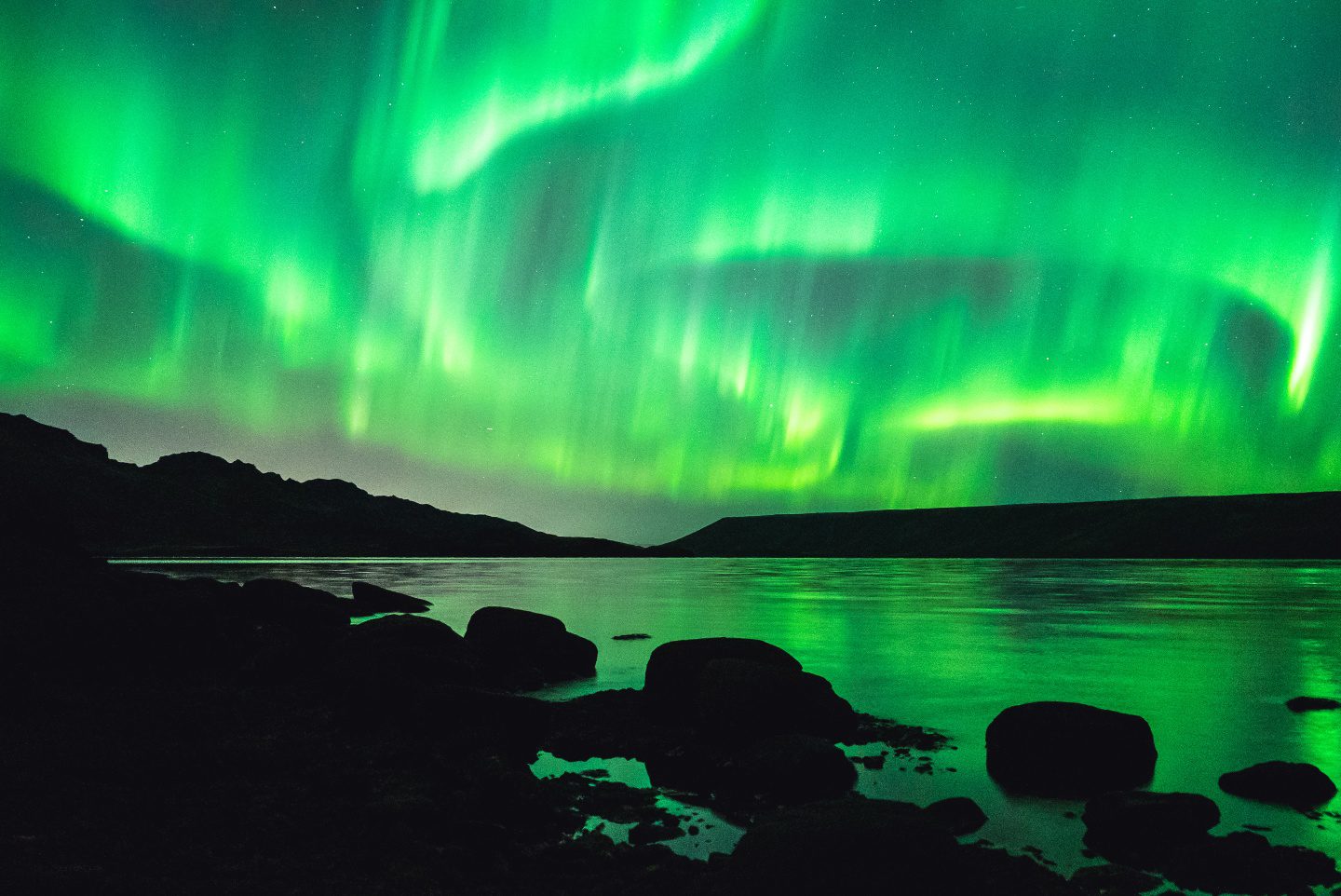
Northern Lights hunting | September to March
They call it hunting for a reason. The Northern Lights are by no means guaranteed on any visit to Iceland, so you should always be thinking about how to maximise your chances as much as possible. This usually boils down to two things; staying as long as possible and avoiding unnatural light at all costs. The way Hidden Iceland runs their Northern Lights tours is to do fun, adventurous activities during the day, then stay in secluded accommodations (hotels and lodges) at night that give you ideal viewing right from your hotel balcony or hot pool. Our expert guides will then venture out with you to show you how to get the best pictures and teach you the science behind this incredible phenomenon. Although Iceland is in an ideal latitude to see the Northern Lights, you do still have to contend with cloud cover and solar wind strength (number of particles coming from the sun), so it is best to maximise your chances by staying for at least a week. Seeing the Northern Lights is technically possible from mid-August to mid-April, but early September to late March is prime time, with plenty of darkness.


Blue Ice Cave Discovery | November to March
Blue ice caves are formed from the summer melting of the glacial ice. As the ice melts, the water will seep into cracks and create deep cavities thanks to the melting and eroding. When the winter comes, the melting stops and the water disappears, leaving behind huge blue ice caves, that are safe to enter with a guide. By the following spring time, the caves will melt away and the whole process starts all over again. This means that each year, we have to find new ice caves for our guests, making the experience completely unique to that winter season. We really are ‘discovering’ new ice caves each year. Some caves are quite accessible by super jeep and walking, while others require a longer glacier hike or even a short helicopter ride. They come in all shapes and sizes, so it just comes down to luck whether you get a winding snake like tunnel, a cathedral sized arch, or an enclosed cave. One thing is for sure, the ice caves will be blue, beautiful and above all else, safe.
Basking under the Midnight Sun | May to August
In the summer months, thanks to Iceland’s lofty latitude, we are treated to 24 hours of daylight for a few months of the year, giving rise to the midnight sun phenomenon. Essentially, the sun, when it sets, doesn’t go low enough below the horizon to give you full darkness. In fact, from mid-June to mid-July, the sun will only disappear under the horizon for a short time, allowing you to literally witness the sun set and rise all in one sitting. This is truly a spectacular experience, particularly when you are watching rhythmic icebergs float by you and seeing the busy Arctic terns dive in and out of the water in search of fish. Having this amount of daylight also means you have plenty of scope to do all the sightseeing you want, and at the time of day you desire too. This is particularly useful during the busier summer months, when the majority of tourists visit attractions in the middle of the day.
Puffin & Whale Spotting | April to September
By April, life starts to return to the shores of Iceland in abundance. Over 10 million Atlantic puffins will flock to the cliff sides to start mating (in full numbers by mid-May until late August). 20 different whale species, including killer whales, will spend their summer in Iceland (early April until late September). Both can be viewed by zodiac boat, sustainable wooden ships, or just perched along the edge of the many cliffs in Iceland. One other advantage to coming to Iceland in spring time is that the lambing season commences, with many accommodations being placed on or near working farms, giving you a first-hand experience at this magical time of year.

Come and find the best of Iceland
I will stop short of simply listing all the great things that Iceland has to offer. But not included in the above list is some of my favourite activities like; horse riding, glacier hiking, snowmobiling, ATV touring, active volcano walks, bathing in natural hot pool and dining on local cuisine. The reason I haven’t put them above is simply because, believe it or not, all of these can be enjoyed all year round in one way or another.
In short, Iceland has something for everyone, regardless of when you want to visit. Come and find the best of Iceland with Hidden Iceland.
Ryan Connolly, co-founder of Hidden Iceland
Getting to Iceland by private jet
Iceland is served by three airports, Reykjavík, Keflavík and Akureyri.
Reykjavik Airport (RKV)
- Iceland’s domestic and regional hub, located in the south of the island, suitable for both commercial aircraft and private jets. We typically recommend Reykjavik as the most suitable airport for clients flying into Iceland by private jet.
- Dedicated private jet terminal (FBO)
Keflavik Airport (KEF)
- Iceland’s main international airport located the Southern Peninsula, around 50km from Iceland’s capital, Reykjavik.
- Dedicated FBO private jet terminal (FBO)
Akureyri Airport (AEY)
- Northern Iceland’s Airport, providing access to the north of island for adventure seekers. Due to its location, Akureyri Airport can be most affected by weather conditions and we’d recommend speaking to one of our aircraft charter specialists for advice on flying by private jet into Akureyri Airport.
For more information on private jet charter to Iceland, please email James Gregory, Head of VIP Charter via sales@smart-aviation.co.uk or call + 441293 551244